8 AM · YOU LEAVE
26°
The room is comfortable.
AFTERNOON · OUTSIDE HITS 35°
↑
The empty room heats up all afternoon.
5 PM · YOU'RE BACK
32°
Unless something saw it coming.
A normal AC reacts after you're already uncomfortable. Vatavaran sees it coming: it forecasts how your room will feel, understands plain requests like "I'm cold", and cools the room before you walk in.
You head out in the morning and the room is fine. By the time you get home, the afternoon sun has baked it. Your choices today are to run the AC all day for an empty room, or to walk into an oven and wait half an hour.
The room is comfortable.
The empty room heats up all afternoon.
Unless something saw it coming.
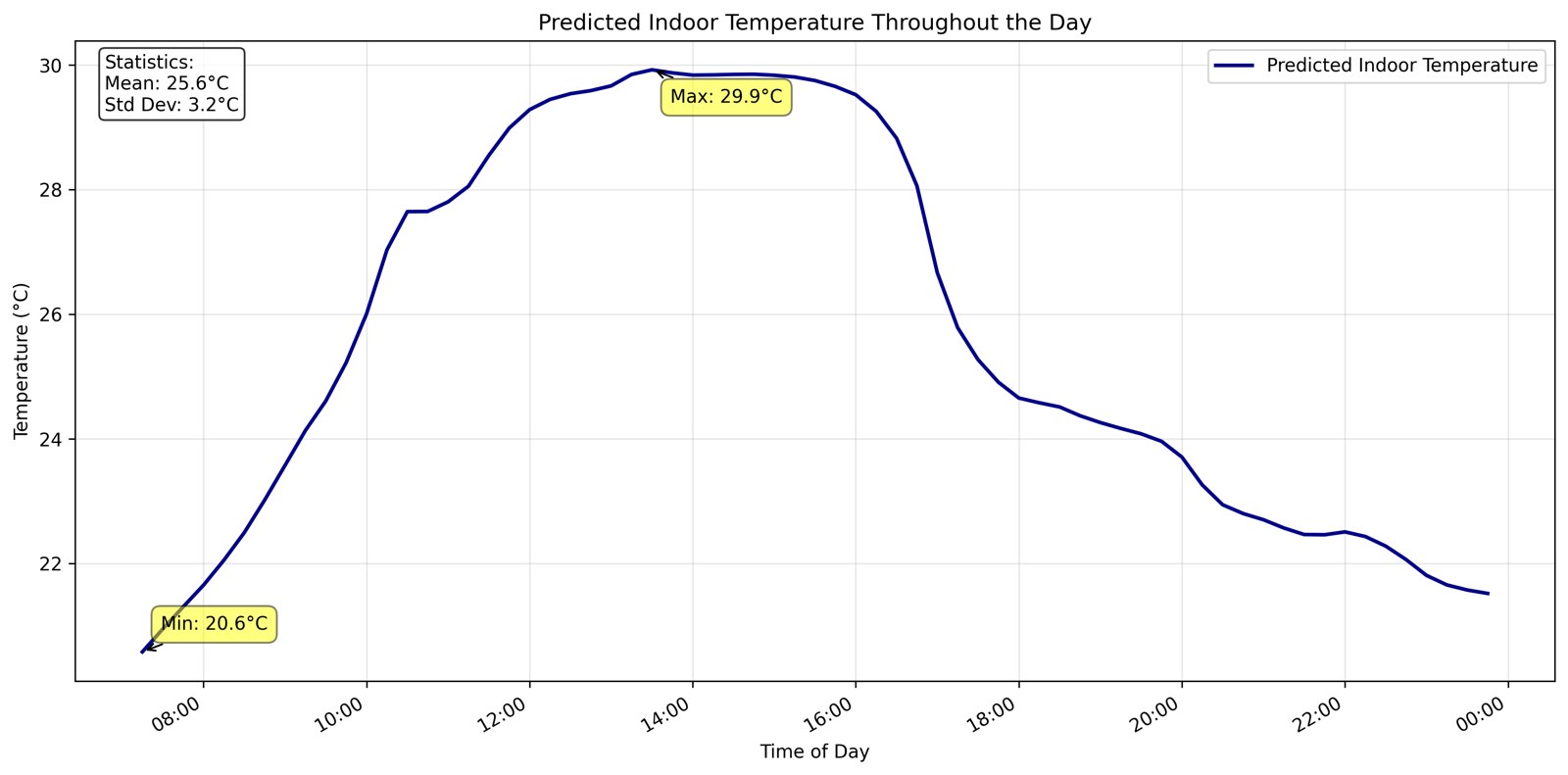
A deep-learning model learns how a room's temperature moves through the day and predicts where it's heading.
"I'm cold" or "make it 75F" become precise temperature and fan changes. No menus, no remote.
Using the forecast and the weather outside, it decides when to start cooling so the room is ready when you are.
The model was trained on 1.5 million temperature readings: a year of minute-by-minute data from five sensor units.
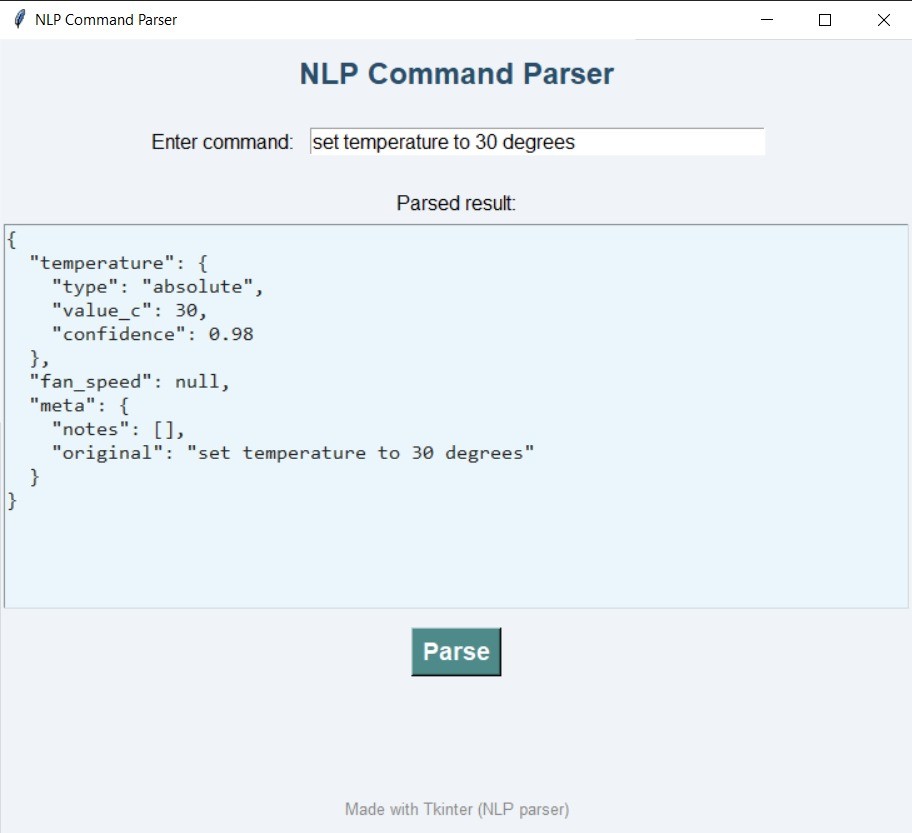
People don't think in setpoints. Vatavaran reads how you feel and how strongly, and turns it into an exact change, adjusting the fan along with the temperature.
The control logic compares where the room is heading with where you want it, checks the live weather forecast, and works out how early to start. Hot days get a head start; mild days don't waste power.
Starts cooling well before you arrive, so the room is ready on time.
A shorter head start for a smaller gap.
Just enough, with no hours of cooling an empty room.
And when you override it, it remembers to undo it: after a few hours it eases back to the normal schedule, so a forgotten "make it 18" doesn't run all night.
Prediction error on data the model never saw in training
Less AC energy than running it all day, in a simulated day of smart scheduling
Real sensor readings the model learned from, across a full year
To understand a spoken-style command and turn it into an action